Skip to content Skip to main navigation Skip to footer

Uncategorized

DANAOS Software: The difference between Industry-Tailored vs. Industry-Specific

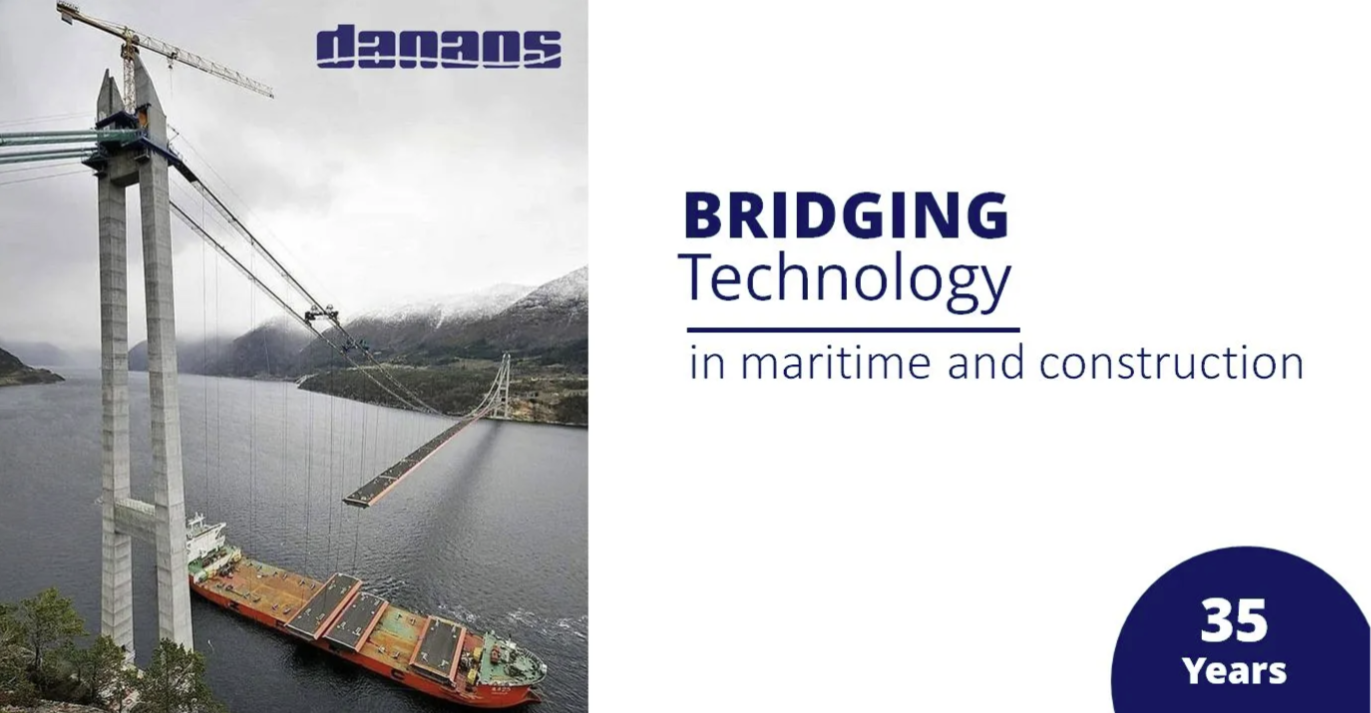
DANAOS’s unmatched Maritime and Construction expertise has been a critical differentiator of our business strategy for the past 35+ years and is the cornerstone of our success.

Working with crème de la crème companies worldwide and consolidating knowledge and best practices from the industry’s specialized stakeholders, we manage to set and navigate to successful digital transformation pathways, assuring growth and business sustainability.

Acknowledging that Enterprise Vertical Software requires the right blend of technology and industry-specific knowledge, in DANAOS, we design and develop our software bottom-up based on specific business logic aligned with Maritime and Construcion operations, only. We call ourselves Specialists in a world of technology Generalists.

3 Statements for Reality Check!

Statement -1-

Generic ERP vendors claim they bring a rare combination of unmatched industry depth and breadth of business process solutions from all Industries.

Answer -1-

Vertical enterprise software like DANAOS has an industry-first approach that brings immediate value to customers by providing the required features and functionalities and integrated business processes. To put it simply: It speaks the language of the industry!

Statement -2-

ERP systems offer greater agility in their business processes, allowing integration between different modules and flexibility on the underlying core applications (user management, workflows, templating, APIs).

Answer -2-

In most cases, the outcome is “spaghetti applications” coupled as modules to serve the generic ERP’s technology agility with the required business ability constantly trying to align to the industry’s ever-changing requirements, eventually leading to the Paradox of Choice (aka Choice overload).

Statement -3-

Along with a global ecosystem of Value-Added resellers and consultants, prominent ERP vendors shorten the time-to-market and get solutions launched that harness best practices from several industries.

Answer -3-

Value-Added resellers, third-party add-ons, and consultants are obvious choices for increasing ERP vendors’ sales network but they can not compete with industry-specific software implemented and supported by subject-matter experts. The shortest path is not always the fastest.

For more information, please visit:

DANAOS ERP: User Experience — User Interface — User Interaction

Designing an ERP interface is a challenge.

DANAOS ERP Offerings:

Are designed bottom-up to tackle the challenges of Shipowners, Ship managers, Contractors, and Engineers, onboard and ashore, site and office.

As Industry-specific Suites, they encompass the full spectrum of operations by digitizing processes and turning data into info, tackling challenges in:

  • efficiency
  • performance
  • compliance
  • productivity and
  • decarbonization

Enterprise-grade systems as such, are challenging to design in terms of seeking balance between providing features and functionalities on on hand, and maintaining an appealing, user-friendly Interface (UI) and effective User Experience (UE), on the other.

DANAOS Design for Modern Web

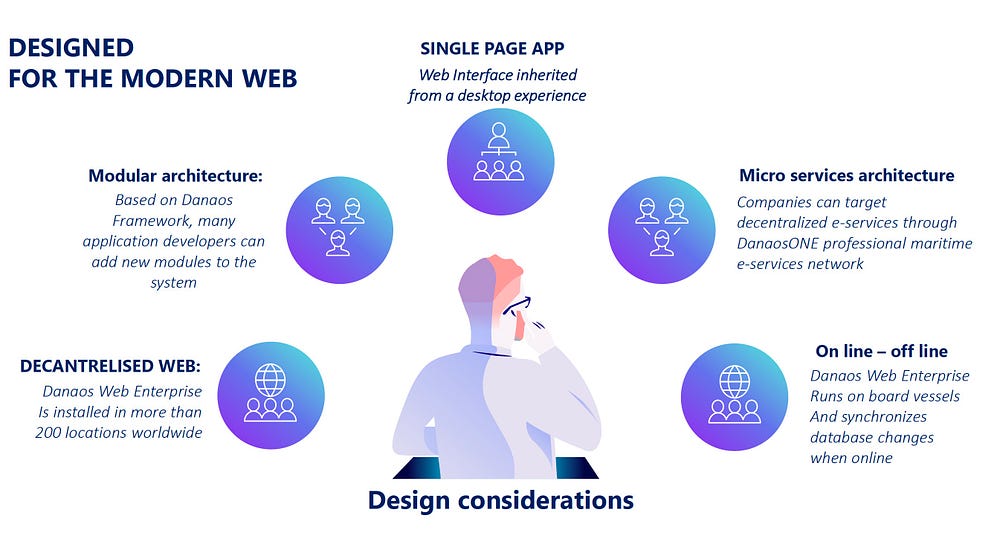
Within the process of transforming legacy applications to the new Modifiable-Of-The-Shelf DANAOS WEB FRAMEWORK, our R&D Team led by our Deputy Director, Mr. Noel Koutlis, has prioritized the following:

1. Business Continuity

Smooth transition to the NEW Web interface inheriting functionalities from the old DANAOS Desktop by maintaining an interchangeable look & feel to facilitate “parallel running” during the phase-out period and shorten the Users’ onboarding and training time

2. Modular Architecture

A personalized menu structure where Users will get staged access (on-demand) to specific selections and modules while maintaining a homogeneous/universal User Experience

3. Offline and Online Availability

Considering the peculiarities of working remotely where broadband internet connectivity is not always a given (ocean-going vessels, remote site locations), the NEW Web Framework should contemplate and facilitate online and offline operations (batch update — synchronization).

4. Scalability — Extensibility — Security

Available on-prem and on-cloud, the NEW Web Framework should be agile enough to provide operating elasticity by optimizing IT resources with system performance while assuring security and access control.

Critical Considerations and Challenges

  • DANAOS Desktop Edition runs on the Windows desktop (PC Workstation) operating system with a legacy interface onboard, site, and offices.
  • 35+ years of design improvements and new customizations have created a cluttered interface, and Users, as industry experts, demand “everything on one screen.”
  • Present-day Users are accustomed to modern web apps where design principles differ from enterprise-grade software UI/UX guidelines.
  • More than 75% of today’s professional computer usage is through browsers, with the rest going through mobile device browsers and native apps.

Redesigning and redeveloping the NEW DANAOS WEB Framework, among other principles, we cherished the feedback from our Clients as collected during our bi-annual User Meetings and further refined from issues collected by our Support Departments and subject-matter experts.

Below is the list of conceptual principles and functionalities that have been implemented in our NEW DANAOS WEB Framework:

User Interface Goals

  • Comprehensiveness
  • Universality
  • Simplicity

User Experience Goals

  • Menu and Modules Organization
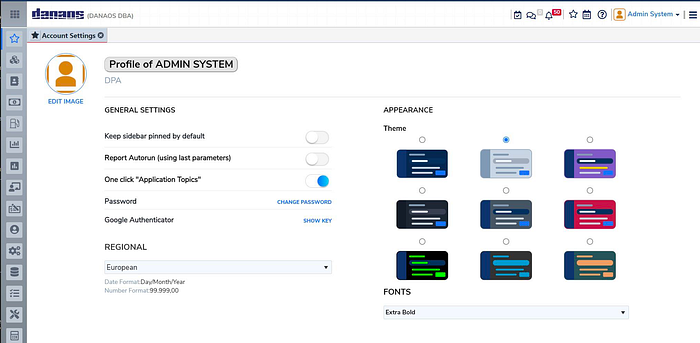
  • User Profiling — Personalization
  • Labeling and Localization
  • Graphical Visualizations
  • On-demand Reporting
  • Any device, anywhere, accessibility

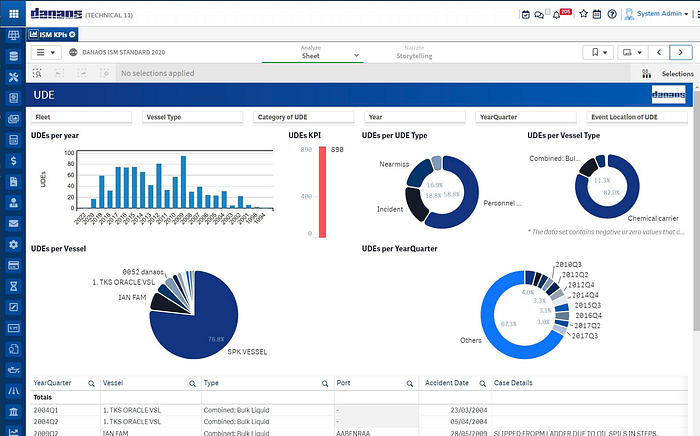
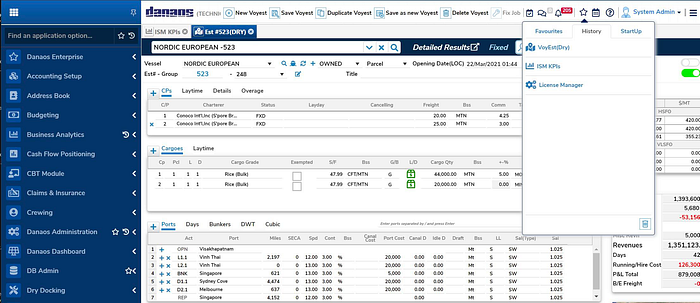
DANAOS WEB Enterprise Screenshots

DANAOS Business Analytics
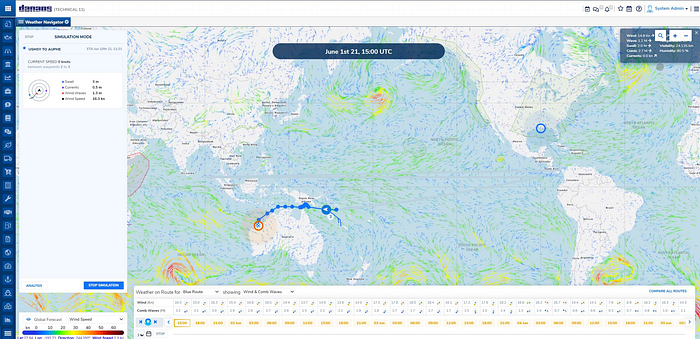
DANAOS Weather Navigator
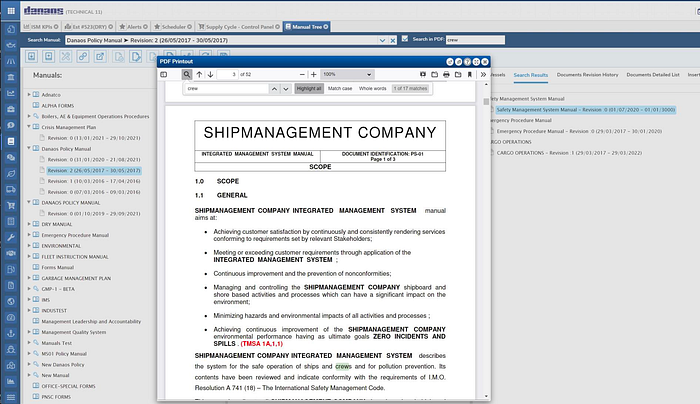
Embedded Viewers
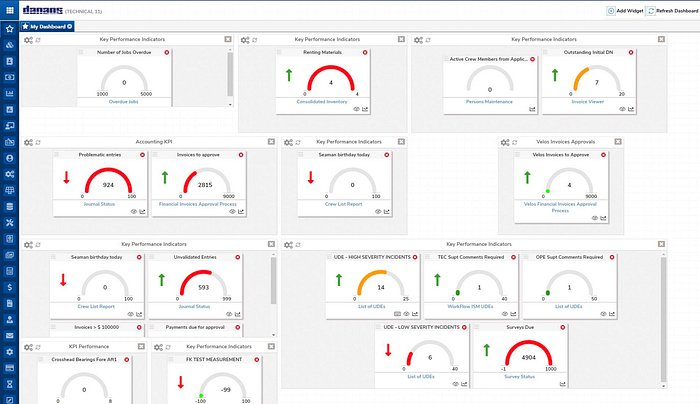
DANAOS WAVES — Widgets Dashboard
Situation Awareness — Notifications, Warnings — Personalized Dashboards
User Interface Options
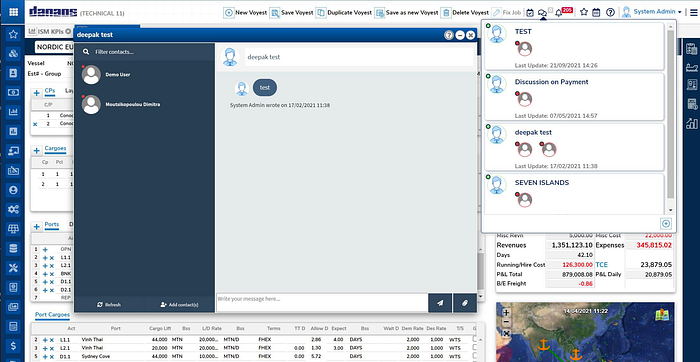
User Collaborations — IM
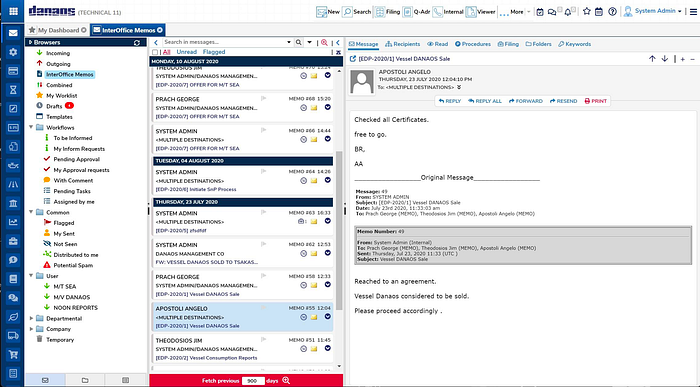
DANAOS InfoGATE — Corporate Information Management System
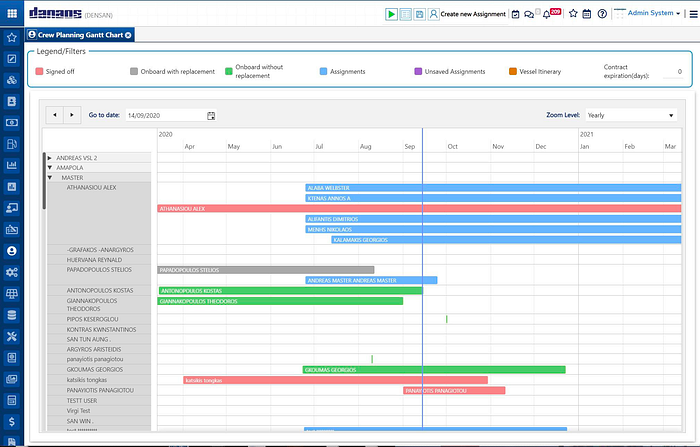
DANAOS Crew Planning

For more information, please visit:

DANAOS Modifiable Off-the Shelf-Software (MOTS)

During each ERP implementation period, the extent of customizations and integrations can be indefinite. Regardless of the implementation methodologies, the scheduling, and the blueprints, the truth is that Clients expect the new system to fit like a glove and to do everything. The Works!

Commercial-Off-The-Shelf Software Evolution

Setting the Scene

Originally, the term Commercial-Off-The-Shelf Software (COTS) was used to refer to IT infrastructure applications such as operating systems and databases that allowed for a minimum to no customizations, installed and executed Out-of-the-Box.

The Middleware

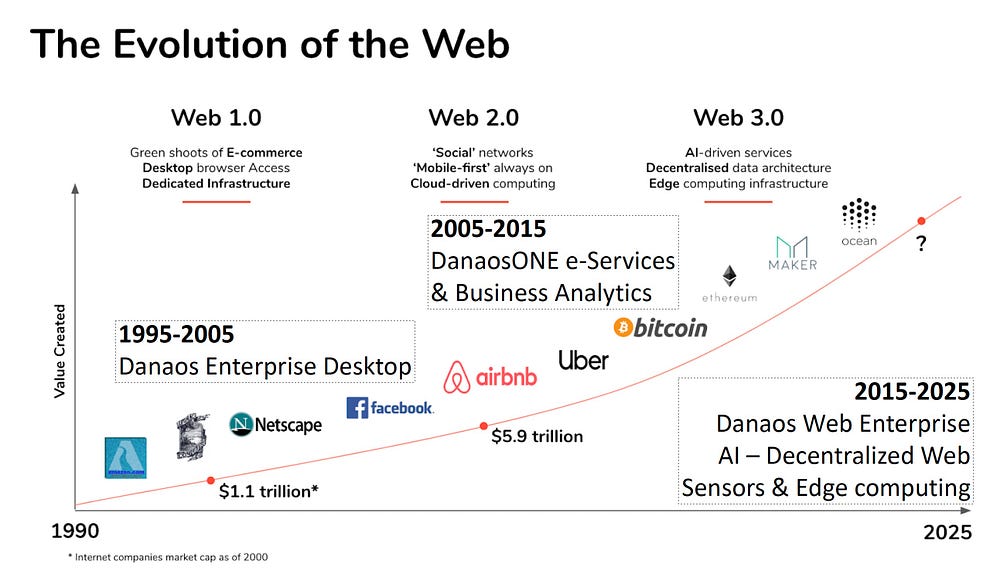
At the beginning of the Digital Transformation era, around early 2000, and in order to effectively digitalize business-specific processes, ERP software vendors introduced a new multi-tier (n-tier) Software architecture and the idea of Middleware.

Middleware is a new Layer sitting between the database and the User interface (hence the middleware term) where IT professionals (business consultants) could configure (and in some cases customize) the new ERP system to each Client’s requirements … to fit like a glove!

Middleware allowed system admins to manage users/roles and access rights, forms design and looks, setup workflows, customize templates and extensive parameterization in order to achieve: localization.

The whole implementation process was time intensive requiring several hundreds if not thousands of man-days of implementation, testing and training.

SaaS

With the arrival of the cloud-based, subscription model, the Software was sold as a Service (SaaS). Consequently, Software Vendors steered their offering from COTS with Middleware to a less “versatile” software architecture trading in extensive customizations with short time-to-market and effective operations.

SaaS vertical (purpose-specific) apps like ERP, SCM, HR and CRM run Out-Of-The-Cloud, on-demand (to use the IBM tagline). Main software vendors were selling Out-of-the-Box (Out-of-Cloud) apps as COTS highlighting the OPEX against the old CAPEX selling models and the versatility of operating from any device, anywhere.

From COTS to SaaS

As in most cases in software evolution, technology and system architecture looped 360 degrees starting from:

COTS → COTS + Middleware → SaaS → COTS

DANAOS MOTS, the Modifiable Off-The-Shelf Software Approach

MOTS is based on the concept of successfully orchestrating a set of purpose-specific applications that are established on an Industry-Specific Platform.

A Platform that serves as the bedrock of the Digital Transformation Process where the digitization of business operations can be achieved fast (faster than any other generic ERP) by configuring, customizing, and integrating these purpose-specific applications on the same Platform. This micro-app architecture provides unparalleled versatility and agility when compared with the older monolithic concept.

Similarly to real-life operations where processes and procedures intervene with each other, a MOTS Platform allows for digital mapping of these processes and the interactions/transactions between users and data.

The key of success relies in the Corellation between the Indsutry specialization and the Platform. Otherwise you are back to square one. Back to the old-fashioned COTS implementation.

Towards the Digital Transformation journey, DANAOS has appropriately identified that successful enterprise-grade Suites (Assets Management for Maritime — Shipping, ERP for Construction) rely on an industry-specific MOT Platform: DANAOS WEB FRAMEWORK.

DANAOS web-enabled software solutions bundled with professional Services encompass the full spectrum of the shipping and construction industry processes, addressing all daily challenges, either as stand-alone Applications or as scalable, agile, secure, and fully integrated Suites of Modules, accessed from everywhere, anytime.

All modules of each Suite (Financial/Commercial/Ship Management) have been designed under the same concept and they offer the same user interface.

Modules process information from one department to another, if that is required. The linkage between the modules can be progressive to support the initial stages. This structure offers DANAOS’s Clients the potential to activate the system progressively, according to its requirements.

Information is shared seamlessly through the departments and authorized users; supporting digital capture and distribution of corporate knowledge, corporate reporting, business analytics, performance monitoring (Key Performance Indicators), and process optimization.

DANAOS WEB PLATFORM is an engine (a tool) that maps and aligns each Client’s digital corporate strategy to the expected outcome from the apps. The linkage between the software apps/modules can be progressive, escalating from initial to advanced stages, involving more users and processes progressively.

For more information please contact:

How DANAOS tackles the challenge of encouraging Users into utilizing the new ERP System

Our Background

With more than 600 Clients worldwide and almost 4 decades of experience, DANAOS is the leader in enterprise-grade Vertical Software specializing in Maritime and Construction.

As Specialists in a World of Technology Generalists, we believe that successful digital transformation is all about turning around Organizational Culture.

This can only happen when you provide: in-depth industry knowledge and the right technology –as one-, gaining the respect, the recognition and the trust of the Users and encouraging Management to pivot successfully.

The Challenges

Generally speaking, most corporate users are reluctant into using a new system. Eventually, the system becomes obsolete and the investment of the new ERP implementation goes down the drain!

More specifically:

  1. Users subconsciously believe that even proper utilization of the ERP system may enhance the overall business competitiveness on one side, it might alleviate the reliance and appreciation on their role and eventually lead to firing, on the other.
  2. An ERP implementation adds up to Users’ daily work as an extra overload and a new burden, usually augmented along with the “irrelevance” of generic ERP implementations, eventually discouraging users (mostly key users) to launch and operate the ERP System.
  3. ERP systems require many months, if not years of implementation. During this time there is a fatigue of customizations, training, and support. Both Vendor’s Consultants and the Customer’s Users lose vision and abolish the overall project, leading to unfinished projects where users are trying to persuade Management to change Vendor and/or Consultant … and start again.
  4. An ERP system does everything! That is a false statement. A centralized, enterprise-grade system (aka ERP — Enterprise Resource Planning) does a lot of things but not all. It is usually complemented by other systems, extensive customization, and integrations. In most cases, Management gives users a wrong perspective and expectations, leading to misconceptions and discouraging users to embrace the implemented ERP features and functionalities, considering them lesser than anticipated.
  5. Nobody Ever Got Fired for Buying IBM! This famous ad motto indicates that in most cases IT (influenced by marketing) patronizes Corporate Management to select a mainstream — “well-known” — ERP Vendor and Platform, ignoring the technology domain specifics (eg. ConTec, MarTec) and the key business operations. Generic ERP consultants replicate and digitize (in most cases unsuccessfully) existing business processes with the aforementioned results and cost-savvy implementations.

What do we do differently and How do we tackle the Challenges?

1. Advisory/Consulting and Managed Services

We employ engineers, scientists and professionals that bring deep, functional expertise and have a multiplier effect in providing consulting and advisory services along with the utilization of our software. As experts in action, we follow a process-based approach enabling the entire business to understand how inputs are converted to deliverables.

Our stalwart consultants will help you transform your operations and embrace innovation, holistically, connecting:

Our Software Features to Your Activities, Your Activities to Strategy, and Strategy to Best Practices, creating the greatest value.

2. Customizations — Adaptation Services

An ERP system is the digital foundation for any company. It’s a mission-critical system that should encompass both knowledge of your business specifics as well as localization to the market and geographies that it operates.

We lead by example and we become better and better every day, adding value to our system by performing challenging customizations based on user change requests, turning Our Software into Your Solution.

3. Product Training — Certifications

We provide the required hands-on training and knowledge transfer, alleviating the burden from users’ daily workload while encouraging the utilization of our software.

We create the necessary trust to operate efficiently using our software.

We assure a fault-tolerant environment that keeps your software functioning at any given time according to the attached training plans and continuous training programs.

4. Support — Customer Success

Customer Support is what really differentiates us!

Ensuring customer satisfaction and utilizing internationally recognized best practices and methodologies, our Client Support team builds and maintains strong, long-term relationships with Customer Lifetime Value (LTV), abiding and embracing corporate accountability towards the vision of delivering unparalleled Quality of Service.

Performance-as-a-Service

We do what a Client wants us to do!

We overdeliver, customizing our feature-rich, Modifiable of-the-Shelf Software and we bundle it with the best-of-breed of our Services so that Our Software can become Your Solution

For more information visit: